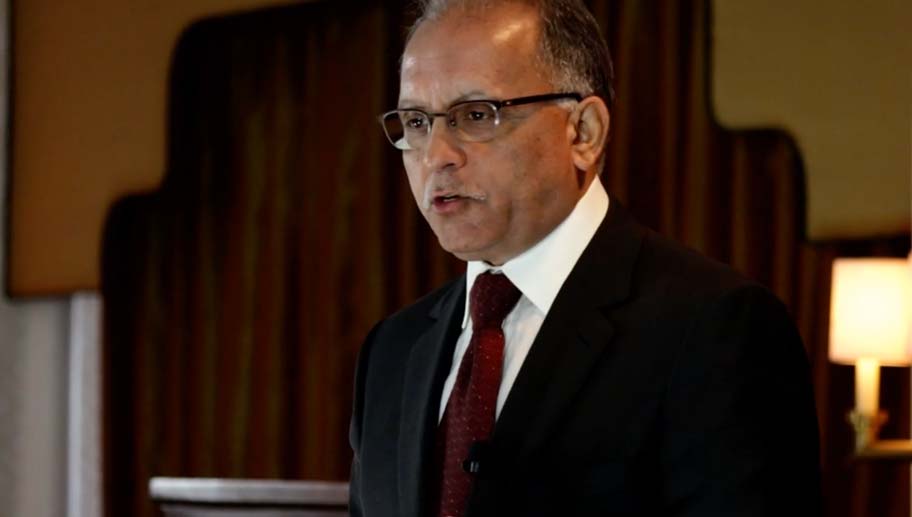
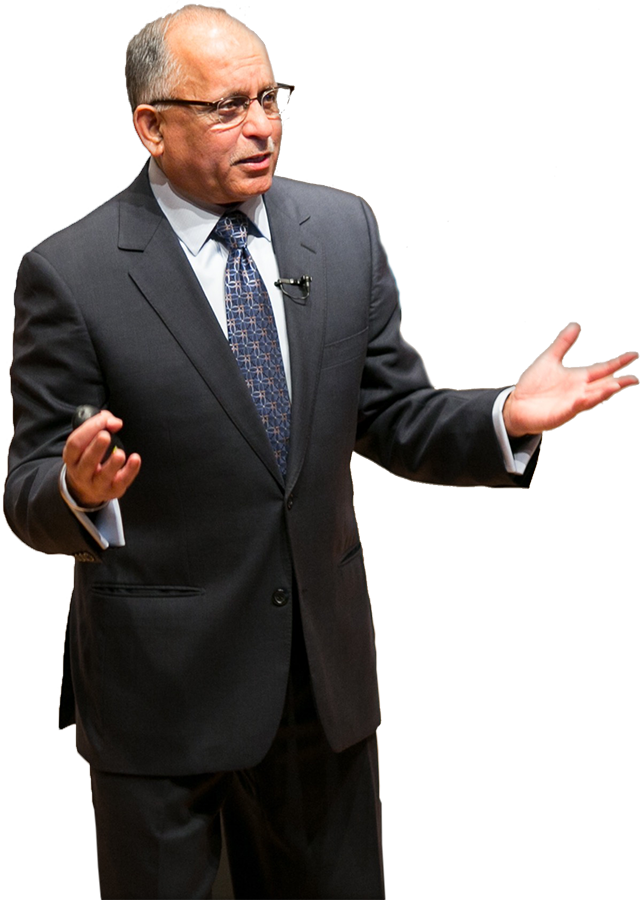

TedLevitt.jpg

Recently, I was in Hyderabad, India, teaching a course on Customer-Focused Marketing Strategy at the Indian School of Business.  As a pre-reading for the course, I recommended Ted Levitt's classic article Marketing Myopia - classics do have their place, even in an age of bulimic sound bytes! 


Even though I have read Marketing Myopia several times, I favored discretion over valor and decided to read it one more time, just in case somebody was hell bent on peppering me with tough questions. 


Reading the article again was more than just a born again experience.  It was a lesson in humility.  Here was an article, first written in 1960, that had nailed several things we are still wrestling with today.  Little wonder that the late Ted Levitt is regarded as one of the most widely respected thinkers in the field of marketing and management. His work and writings have changed the way companies think about their businesses, organize for innovation and creativity, and market their products and services. 


A homage to some of Ted Levitt's best thinking follows:


Marketing Myopia


The article that gave rise to the famous aphorism - "Customers don't buy 1/4" drills, they buy 1/4" holes."  It still provokes serious thinking.  The big idea - get companies to think of their businesses in terms of customers needs, not in terms of the physical products and services they produce.  Levitt asserted that all companies and industries were once growth industries.  If they have stopped growing it is not because markets are saturated, but because management failed to correctly grasp what business the company was in.  Invariably, companies that run into growth problems suffer from one overarching weakness; they are overly focused on physical products and services - credit cards, cell phones, mortgages, HDTV - and less on customers and their needs.


After the Sale is Over  - - -


Long before there was CRM and Relationship Marketing, Ted Levitt was discussing the importance of cultivating relationships with customers.  The big idea - a sale signals the end of courtship and the beginning of a marriage with the customer.  The quality of the marriage determines whether there will be continued or expanded business, or troubles and divorce.  Levitt considered relationships with customers as an asset.  The more complex the product and service, the more salient the customers' needs, the more critical and valuable is this asset.  He advised companies to manage and continually invest in this asset, since over time relationships would trump all other aspects of the marketing system, including technology. 


Marketing Success Through Differentiation - of Anything


The big idea - every company should resist the push towards becoming a commodity, by attempting to differentiate not only their products and services, but by differentiating their whole business, in terms of what they offer and how they operate.  What we call reinventing business models today.    To elaborate, the basics of checking and savings accounts at Citi, Bank of America, Chase, and HSBC may be identical, but how these banks do business and the resultant customer experience may be wholly different/differentiated, and hence a non-commodity.


Moral of the story - knowing the catch phrases from the most recent NY Times best seller list may get you attention at cocktail parties.  But knowing the essence of classical marketing and business writings will get you the promotion you desire and significantly add to your bank balance!  Not a bad thing in any age, especially in today's recessionary times.


luft.jpgLast month's volcanic ash cloud over Europe disrupted air-traffic and cost the airline industry over £1bn.  But the ash cloud also revealed the serious absence of collaboration between the various European air traffic authorities.  Apparently there are 27 different air spaces across the EU, each one with its own authority and bureaucracy.

Europe's planned Functional Airspace Blocks

The BBC reports:
"There has been widespread criticism of the EU's response, with Euro MPs and airline officials complaining that the Commission and transport ministers did not hold emergency talks until 19 April."

That's five days after planes stopped flying. What were they waiting for? An "all-clear" signal to fly to their meeting?

In times of crisis, it seems like collaboration between governments and institutions breaks down.


Lest we think that this is sort of thing doesn't happen here in the US, one only has to look at two more examples: Katrina, and the BP oil-spill in the Gulf of Mexico.

So what is it about large institutions that makes collaboration so difficult, if not downright impossible in times of crisis?

Here are seven possibilities:

- Lack of a Shared Vision

- Absence of Trust

- Institutional Blindness

- Territorial Turf Wars

- Lack of Leadership

- Insensitivity to Customers' Needs

- Culture of Unaccountability
And that's just the tip of the iceberg.

Among individuals, however, we see something else entirely. 

In times of crisis, passionate individuals can come together to collaborate in ways that defy the norms of business and institutional performance.

tpop.gifIn their latest book, The Power of Pull, John Hagel, JSB, and Lang Davison describe Joi Ito's successful effort in distributing a script to post messages to Twitter that would make it virtually impossible for the Iranian government to monitor and stop the service during the green revolution (which we all hope is still alive). 

Overnight, Ito assembled a loosely knit team of collaborators who got created a distribution process which also could not be traced.  This is a remarkable example of how passionate individuals can come together in times of crisis and make a real impact in a space of hours.

Our institutions can't seem to do anything resembling this sort of collaboration - particularly when the answers lie outside the institution.

Back to the European air-traffic story.

Here's something else we learn from the BBC:

In addition to avoiding the kind of mix-up we saw last month, a more efficient air traffic system could cut emissions by up to 12% for the average flight.

We learn that, on average, planes fly 49km (30.4 miles) longer than strictly necessary, and airport slots are allocated independently of flight plans, causing extra costs and waste.

This is the cost of not collaborating.


CKPBU.jpgProf. C.K. Prahalad
, Paul and Ruth McCracken Distinguished University Professor of Strategy, at the Ross School of Business, University of Michigan has passed on.  Our thoughts and prayers are with his family, as we wish his soul a peaceful onward journey.


He was a globally renowned and recognized scholar, teacher, consultant, and thinker.  I knew C.K. Prahalad, before he became C.K. Prahalad, the Business Guru.  We had the good fortune of having him as our Business Policy professor at the Indian Institute of Management, Ahmedabad, in 1975.  Even in the short span of a single trimester, it was clear that Prof. Prahalad was destined for greatness.  The crispness of this thinking and his lucid explanations continue to inspire and live in my mind after all these years.


The global business community has hailed and celebrated several of Prof. Prahalad's ideas.  For me, two stand apart from the rest.  His work with Gary Hamel on Competing for the Future and his writings on The Fortune at the Bottom of the Pyramid.  I will be reading them again, to inspire myself, and to pay homage to C.K. Prahalad's memory.


What they undertook to do

They brought to pass;

All things hang like a drop of dew

Upon a blade of grass.   


W.B. Yeats' personal thank you note to the great teachers through the ages.
In Rethinking Marketing: From Marketing Products to Cultivating Customers my co-authors and I wrote about how companies must make products and brands subservient to long-term customer relationships.  We also made the point that for ongoing customer value innovation to become a part of the DNA of the organization, it is important that the company move from an internally focused concept of customer value creation, to a more open, collaborative model of co-creating value with customers and other key stakeholders.

In much the same way, I'm more convinced than ever that we must rethink the purpose of modern businesses.  As the global financial crisis has so bluntly shown us, "maximizing shareholder value" is no longer a sustainable purpose for business.  We doubt it ever was.  But back then, Jack Welch was preaching the gospel and companies were lapping it up.  Interestingly, even Jack Welch is no longer singing the "maximize shareholder value" song. 

This is the age of consumer capitalism and the triple bottom line.  The new gospel is people, planet, and then profits.  Near term thinking that just does good for the company without consideration for the environment, or the social social systems that a company operates in, is not a responsible option!    

So where should we look for new role models? 

Across the border to the north, and across the Atlantic to the sub-continent.

rtata.jpg 

Recently I read an article describing Ratan Tata's visit to Canada to deliver the first Thomas Bata Lecture on Responsible Capitalism.

The late Thomas Bata and Ratan Tata, and their corporations have a lot in common.  They epitomize socially-conscious leadership

The Tata story has been well covered in this article, which sums up the vision as follows:

Since its founding in 1868, Tata has operated on the premise that a company thrives on social capital (the value created from investing in good community and human relationships) in the same way that it relies on hard assets for sustainable growth. With every generation, Tata's executives and managers say, they have nurtured and improved their capability for "stakeholder management": basing investments and operating decisions on the needs and interests of all who will be affected. For Tata, this means shareholders, employees, customers, and the people of the countries where Tata operates -- historically India, but potentially anywhere.
These are not platitudes. Tata has won the goodwill of the people not by talk, but through action. Key decisions are based on the impact on society.  The company's humanitarian actions, for both employees and non-employees, following the dastardly November 2008 terrorist attacks on the Taj hotel are well documented, and have won raging applause from even the most anodized critics of business. 

People first, business second.  Both Bata and Tata teach us that it is possible to be a global powerhouse without sacrificing one's soul.  It is not necessary to separate social good from business well being, as so many companies do.

Dartmouth's Professor Vijay Govindarajan explains the Tata Nano as a social innovation:

Through his actions in the Tata Nano project, Ratan Tata has demonstrated that capitalism can have a soul--the profit mission and the social mission do not conflict and can, in fact, be pursued simultaneously. 
Increasingly, we are going to see businesses doing well by doing good, a philosophy that guides thinking and decision making at Unilever. In a recent discussion, Harish Manwani - President Asia, Africa, Eastern and Central European Regions at Unilever - shared that for Unilever value co-creation was not just collaborating with customers, it is collaborating with the interlinked ecosystems that the company operates in.  According to him, this passion and commitment to doing well by doing good, is the reason why the Dow Jones Sustainability Index has rated Unilever as the best company in its category for ten years running. I intend featuring more of the Unilever social responsibility story in my forthcoming blogs.

Social good and company well being can co-exist, as the examples of Bata, Tata, and Unilever demonstrate.  They should not be divorced from each other any longer. The people and the social systems they live in are both customers of the company.  The paramount purpose of modern businesses should be more than just "Do No Harm."  Rather it must be "Do Long Term Good for All."

India's economy and its companies have been getting a lot of attention in the past decade.  A trend map of India at the annual Davos conference will attest to this.  A decade ago, India was invisible at Davos.  Today, to the uninformed observer, Davos may well be a Bollywood party.    


indiaway.gif

The Tata Group, Mittal, Reliance, Infosys, Hindustan Computers Limited, Ranbaxy, ICICI, Hero-Honda, and Bharati Airtel are a few Indian companies that regularly garner media headlines.  The world knows a lot about these companies, and their products.  But what does the world know about the leadership of these companies?  The answer is very little.  Beyond a few names, like Naryan Murthy, Ratan Tata, Mukesh Ambani, and Laxmi Mittal, the West knows little about how Indian companies are managed.  The India Way, authored by Peter Capelli, Harbir Singh, Jitendra V. Singh, and Michael Useem intends to rectify that.  


Do Indian companies have their own way of managing and running their companies?  The answer is a most emphatic YES!  Instead of using management ideas and practices that dominate Western businesses, Indian companies are applying fresh practices of their own, to shape their strategy, leadership, talent, and organizational culture.


Here is a sampling:


  • The best Indian companies drive their performance by investing in people; motivating them, empowering them, and investing in their training
  • For them, the CEO's office and function is not as critical as in the West.  Many of these companies don't even have that title, and practice group decision-making at the top
  • Envisioning a path to the future, strategic thinking, and guiding change is very critical to the leadership of these companies
  • As is being inspirational, accountable, and entrepreneurial


Corporate Social Responsibility (CSR), is not an occasional, negotiable activity for most Indian companies.  Partly because most organizations in India tend to be surrounded by mass poverty, and partly because CSR is a reputational asset that helps negotiate deals with the government, companies are very serious about their obligations to the ecosystem they operate in.  40% of all Indian companies routinely monitor their progress on CSR goals, compared to just 17% in the U.S.  


Are these practices transferable to the West?  That all depends on the priorities of Western companies.  Consider the top priorities of Indian companies:


  • Looking beyond stockholders' interests to public mission and national purpose
  • Drawing on improvisation, adaptation, and resilience to overcome endless hurdles
  • Identifying products and services of compelling value to customers
  • Investing in talent and building a stirring culture. 


Perhaps the experience of dealing with obstructionist bureaucracies, crumbling and antiquated infrastructure, and growing up in hardship and scarcity can't be replicated.  But inspiration to do well by one's employees, and build lasting legacies, around entrepreneurship and long-term success, can certainly be imported, and emulated.   


There's always been an India Way.  Its just that its more palpable today.  Hunger can be a beautiful thing - especially the hunger of challenger companies not to be perceived as mere Xerox copies of front line Fortune 500 companies.  Let's hope, for their own sake, Indian companies don't forget this.  


The old adage - Fat Dogs Don't Fetch - applies to all companies in all countries!


Recently, I had the pleasure of being introduced to ICFAI University, one of India's leading educational institutions, recognized for its skills in developing innovative educational programs and writing insightful case studies.  It is also a leading publisher, 18 magazines and 46 journals, in areas such as marketing, finance, environment, and health care.

effectiveexecutive.gifEffective Executive is the flagship magazine of the University.  Started in 2000 and published monthly, it features articles on topics like marketing, strategy, sustainability, and innovation.  Every issue also features interviews on these topics with experts.  In the recent past, the magazine has interviewed globally renowned experts and intellectuals, like Philip Kotler, Michael Tracy, Pankaj Ghemawat, Vijay Govindarajan, and Dr.A.P.J.Abdul Kalam, a renowned nuclear scientist, and former President of India.

The magazine's latest issue is dedicated to the theme Co-Creation: the New Frontiers of Competitive Advantage.  The issue features an interview conducted with me on my HBR article and on co-creation

I would like to share two key topics covered by the interview.  The first deals with the nature of co-creation, and the second with the difference between customization and co-creation.

Understanding co-creation

Often, the more people use an expression, the less certain we are what they really mean by it.  It's as if usage guarantees understanding, and more frequent usage guarantees deeper understanding.  But that's not true.  Take expressions like Web 2.0, the new normal, or sustainability.  People don't often explain or use these terms the same way. 

In the interview, I explained co-creation not by defining it, but by decomposing it, to better explain its features and characteristics. 

Co-creation, as currently used in the business and marketing world, has a very specific meaning.  Rather than present a definition, my preference would be to explain co-creation by decomposing it, so we can better understand its characteristics.  First, co-creation, represents interaction, and takes place between one or more firms, and one or more actual or potential customers.  Second, this interaction is willing, purposive, and intentional.  Third, this interaction is managed, either by the firm, or jointly by the firm and its customers.  Fourth, the output of this interaction results in value for both the firm and for its customers.  Lastly, the value created for customers may or may not be unique, and is derived through a variety of experiences, such as suggesting ideas, refining current value, designing new products, improving current designs, fixing defects, and consuming new products and services.

Customization and Co-Creation

I've blogged on this topic before when I interviewed Page Moreau.  But its worth revisiting, since the two words are often used interchangeably, giving the impression that the two concepts are the same.

There is no doubt that in specific cases there is a blurring of boundaries, but customization and co-creation are not the same.

Let me answer the last part of the question first - do boundaries between customization and co-creation get blurred?  Yes, they do.  Part of the reason is that researchers and authors who introduce these terms are not always diligent in defining them, and differentiating them from other similar terms.  Let me illustrate this for you with an example.  Take a men's clothing company like Paul Fredrick, that sells its offerings through a catalog.  If you want to order dress shirts, you have two options.  You can either buy the color and pattern you prefer, in your size, based on all the shirts displayed in the catalog, or you can order a custom shirt.  Customization allows you to mix and match the fabric, collar and cuff styles, fit, pleat style, pocket, among other things!  But wait, there's more.  You can also have the shirt personalized, by having your initials monogrammed in several different styles, in different colors, on either the cuff, or the pocket.  Customization, personalization, or both! But is it co-creation?

What is important to realize is that customization and personalization are possible only within the boundaries of choices offered by the company.  To go back to the shirt example, the only way I can order a shirt with kurta sleeves (an Indian style shirt with tubular sleeves) is if the company offers that option.  If the company does not offer that option, then all that I can do is pick from the sleeve styles offered.  This is in sharp contrast to co-creation.  If the shirt were being co-created, then all options would be on the table, including kurta sleeves, because the starting point would be a blank canvas, not a menu of predetermined options and styles.

I am sure I'll blog again on the similarities and differences between customization and co-creation.  We owe it to ourselves to keep our thinking fresh and focused. 
Cogito ergo sum - one of Descartes's most famous legacies - loosely translated as, I think, therefore I am.

Peter Drucker had a similar way of introducing himself - I write - is how he used to introduce himself.  What Peter should have really said was - I think and I write, and I don't know which one comes first.  An interesting chicken and egg problem, but not one you lose sleep over, especially if your writing borders on the prolific, and your thinking can stand the test of time!

November 2009 marked the 100th anniversary of Peter Drucker's birth and we should celebrate it.  Universally acclaimed as a great management thinker and business guru, for over 50 years, from the early 1950's to the early 2000's his provocative and often controversial ideas dominated the business world. 

The management kingdom is rediscovering him and finding him to be just as relevant as he was all those years ago. 

druckersbrain.jpgHBR ran a special issue on Drucker in Nov. 2009 - asking What Would Peter Drucker Do?

Books like Inside Drucker's Brain are attempting to make him and his cutting edge thinking more accessible.  

Paradoxically, in the West, where he made his greatest contributions, he is all but forgotten, pushed aside by gurus du jour.  On the other side of the Atlantic, Drucker societies are still alive and flourishing.  They assemble routinely to discuss his work and learn from his teachings.

It is impossible to compress a sixty-year career comprising over thirty books that have sold over 5 million copies and scores of articles, including some HBR classics, in a page or two.  So, how about we take inspiration from Hollywood and present instead a 90 second trailer on the World according to Peter Drucker.

His signature idea - Management by Objectives; still relevant, especially as companies flounder with direction and purpose. 

His committed and unwavering focus - the long term health and well being of companies, not short-term hits.  He rarely blamed individuals, maintaining that it was always the underlying systems that were the root causes of failure.  He believed organizations should constantly challenge their design and operations; he saw this as the key to long-term well being.

His favorite questions - What is your company's ultimate purpose? Who is the customer? What is your mission?  What is it you should continue to do?  What is it you should stop doing? Where has the obsession with the short-term undermined long-term effectiveness? Why aren't some younger people in the company earning more than the Directors?  

His passions - writing, context-bound thinking, integrating ideas, processes not outcomes, urging companies to innovate and create the future, long-term corporate well being, nurturing future stars, and of course - the CUSTOMER!

What did A.G. Lafley, ex CEO of P&G, learn from Drucker?

In A.G.'s own words:

Over the years, I learned many things from Peter, but far and away the most important were the simplest:

  1. The purpose of company is to create a customer.
  2. A business is defined by the needs, wants, desires a customer satisfies when buying the company's product or service.
  3. To satisfy the customer is the most important mission and purpose of every business.

No presentation of Peter Drucker's work is complete without sharing some of his memorable quotes and brilliant observations.  A very brief, you might even say self-serving, sampling related to marketing, the customer, and innovation follow.   

  • Because the purpose of business is to create a customer, the business enterprise has two--and only two--basic functions: marketing and innovation. Marketing and innovation produce results; all the rest are costs. 
  • The customer rather than the manufacturer defines a market
  • Of course innovation is risky.  But so is stepping into the car to drive to the supermarket for a loaf of bread.  All economic activity is by definition 'high risk.' And defending yesterday - that is, not innovating - is far more risky than making tomorrow.
Paraphrasing Drucker and taking a few artistic liberties: since customers define markets, and market creation should be the fundamental focus of a company, and innovation is the primary fuel that drives this market creation - then what better world to be thinking, writing, and consulting in, than customer-driven innovation!

Happy 100th Peter!  You are not forgotten.

We are being constantly reminded, by scholars, practitioners, and journalists, that today's individuals and business organizations live in a highly networked, interactive, and collaborative world. 

This new reality has given rise to new customer behaviors, and to entirely new vocabularies.  The consumer is dead, long live Prosumers, Trysumers, and several other forms of  - - - sumers yet to be born.

  • Prosumers - today's customers are both producers and consumers; i.e., they are not just consumption machines, but also contributors and co-creators of unique value

  • Trysumers - consumers immune to most advertising, who enjoy full access to information, reviews, and navigation, who love to try out new products and services - appliances, artists, outfits, food, holiday destinations - new "anything", with post mass-market gusto
Despite this daily dose of revivalist thinking, several companies approach their customers and markets as if they were still stuck in the 1960s; an era of impersonal transactions with the customer, relying on everything "mass" - mass markets, mass media, and mass undifferentiated value.  For these companies, Marketing is still a one-way street, where companies do the talking and influencing through their advertising, and customers do the listening and consuming; passively at the end of a long invisible value chain.

There is something wrong with this picture and it needs fixing.  What is wrong is that most companies are still set up to market products.  That needs fixing.  Companies must transition from marketing products to cultivating customers! 

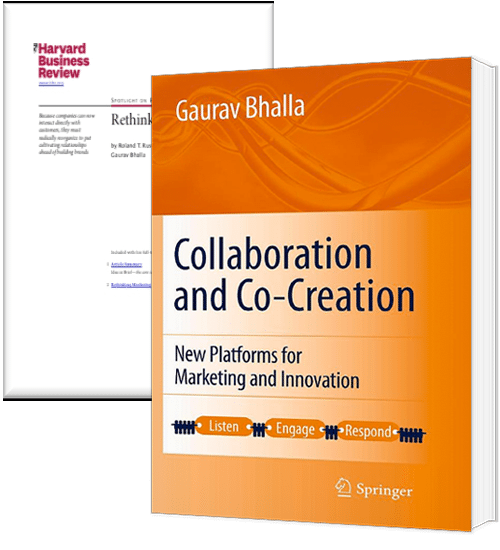
hb.gifIn the January-February Harvard Business Review article - Rethinking Marketing (download here) - my co-authors (Roland Rust, Christine Moorman) and I discuss how companies must shift their focus from driving product-centered transactions, to building long-term relationships with customers by offering whichever of the company's products the customer values most at any given time. 

This can only be done if companies make products and brands subservient to long-term customer relationships.  And that means - reinventing the marketing department altogether.

The essence of reconfiguring marketing as a customer department is captured in this diagram:

hb_dia.gifThe traditional marketing department must be reconfigured as a customer department that puts building customer relationships ahead of pushing specific products. To this end, product managers and customer-focused departments report to a Chief Customer Officer instead of a CMO, and support the strategies of customer or segment managers.

Two key implications of this reconfiguration need additional emphasis:

  • First, reconfiguration is not merely drawing a different looking organizational chart, with different sounding titles.  It is a fundamental shift in allocating, sharing, and managing resources - people, budgets, and information.  This has implications not only for which tasks get priority and how they are executed, but also for who is the best person to execute them.  For instance, since the role of the customer manager is the ultimate expression of what marketing should be - cocreating unique value with and for specific customers - we expect them to approach their task more like consumer anthropologists and behavioral scientists (see my post on A.G. Lafley), as opposed to advertising or promotion specialists.

  • Second, in this reconfigured world, being able to offer relevant consumer value at all times becomes a key driver of business success and profitable growth.  For ongoing customer value innovation to become a part of the DNA of the organization, it is important that the company move from an internally focused concept of customer value creation, to a more open, collaborative model of co-creating value with customers and other key stakeholders.  Integrating R&D into the customer department will go a long way to ensuring that the customer remains at the center of all value creation activities.
A migration from marketing products to cultivating customers will also require a shift in metrics to gauge the effectiveness of a company's customer-focused strategy.  We discuss four new ways of thinking about business success in this customer-led world of marketing:

  • Focus more on customer profitability, less on product profitability
  • Customer Lifetime Value (CLV) thinking should trump maximizing current sales thinking
  • Customer equity - the sum of all CLV's of a company's customer base - should replace a brand equity orientation  
  • Companies should pay more attention to customer equity share, and less attention to market share
I hope you find the article relevant, interesting, and useful.  If you're having similar discussions in your own organizations, please share them with me.  I'd love to start a conversation with you on how we need to rethink and reinvent the fundamental focus of marketing.

DOWNLOAD: Rethinking Marketing, by Roland Rust, Christine Moormon, Gaurav Bhalla, Harvard Business Review, January-February 2010.  

The American Marketing Association (AMA), Decision Strategies International, a global consultancy specializing in scenario planning, and a group of marketing leaders from industry and academics recently completed a project on the role of marketing in 2015 - Future of Marketing in 2015 - an American Marketing Association Special Report.


After nearly a year of secondary research, a survey of business and consumer marketers, and workshops with marketing leaders, the AMA developed four possible future states in 2015 and their potential impact on marketing in the organization.  These scenarios are presented below.  For each scenario, the project also created thumbnail sketches of key goals and objectives of professionals operating in each scenario.  


The four scenarios and the CMO archetypes for each scenario follow:


future1.gif


CMO Archetypes:

future2.gif

While the effort of the AMA to peer into the future is laudable, I am personally very troubled by the output, and the lack of emphasis on some fundamental game-changing trends like customer collaboration, value co-creation, customization, and open systems thinking.  

A useful tactic in evaluating the output of a future oriented undertaking is to study the inputs used.  The report states that the scenario building process began with an identification of forces that might shape the role of marketing between now and 2015.  The key issues and trends identified were:

  • Shrinking world, expanding relationships - increase in globalization and technology integration
  • Rise of new class, BRIC by BRIC - creation of new consumer markets
  • Innovation or Invasion - push back due to micro-profiling and and behavioral targeting
  • Command and Control becomes Cultivate and Create - two way conversations providing valuable information for new products/services offerings
  • Channel Convergence and Consequence - traditional media continues to be challenged
  • Talent Turmoil - increasing competition for valued skills and competencies
  • Pressure to Prove - Marketing is persistently challenged to prove strategic value and bottom line contribution.
Only one of the above inputs - "command and control becoming cultivate and create" - comes close to addressing how the concept and dynamics of value creation are changing.  What could be more fundamental than the identification, creation, delivery, and nurturing of customer value?  Yet not one of the archetypes presented above is obsessed with it.  

The Future of Marketing should be a paradigm shift, not a straight line extension of Marketing's current focus with selling, promoting, and packaging.  Even more disappointing is that the above scenarios and archetypes do little to move Marketing from its current inward product focus to a more outward customer orientation.  

Marketing needs a bolder different future, one that is obsessed with customer value creation.  This bolder future can't be achieved by a functional focus alone, no matter how cleverly worded - network integrator, sales facilitator, etc.  Because Marketing is not a function, it is a business orientation that shapes how a company creates long term, sustainable value for customers, for society, and for itself.

The Future of Marketing can't lie in peddling influence and shouting brand superiority.  It must lie in making investments in consumption ecosystems, of which the company is only one small part.  For the future of marketing to be viable, it must part ways with its incarnation of today.  The scenario that is personally most exciting to me is one where an obsession with customer value makes marketing as we know it today obsolete and unnecessary!

That indeed would be a bright new future.
pagemoreau.jpgPage Moreau is an Associate Professor of Marketing at the Leeds School of Business at the University of Colorado in Boulder.  She obtained her Ph.D. In Marketing from Columbia University.  Her research interests span the areas of customization, value co-creation, innovation, and customer collaboration.  Her 2005 paper: Designing the Solution: The Impact of Constraints on Consumers' Creativity, received the best paper award in 2008.  No that's not a typo.  Academics like ideas in papers to ferment before they recognize them! 

I met Page a few years ago at an MSI conference on Innovation.  We met again in June this year at yet another MSI conference at which she presented some of her ideas on customization.  I thought the blog's readers would be interested, so I invited her for a conversation, to share her thinking, and she most graciously accepted.

Page, let's start by examining the relationship between Co-creation and Customization.  Are they related?  

Co-creation is the bigger concept.  Any time you involve customers in the creation of value for themselves and for the company, you are in the realm of co-creation.  It spans the entire range from idea generation to product development to post-purchase occasions, like usage and consumption. 

And Customization? 

Customization is a sub-set of co-creation.  In majority of the cases, when people speak of customization, they are referring to mass customization, where the emphasis is on feature or attribute customization.  A classic example being Dell - customizing PCs.

However, that's only part of the picture.  Customization is more than just feature customization.  Companies can do more.  For example, companies can customize customer experience touch points, like web sites, user interfaces, and personal services.  

Beyond the obvious benefit - I like it more - what are the key benefits of customization you have observed in your research?  

As you rightly say the most obvious benefit is generating higher customer preference.  But there are other equally interesting benefits.  Take the case of products that can be publicly displayed.  Customization give consumers the power to express their identities, what they value, and what their values are.  A person who uploads the photo of an endangered specie on a coffee mug, like the Polar bear, is deriving a very different benefit and signaling a very different identity than a consumer who uploads the photo of a Parent.  

In the context of gifts, the benefits of customization are equally interesting.  Being able to customize a gift signals some level of effort undertaken by the giver, leading to both the giver and the recipient deriving greater value from the exchange, not just the receiver.  

But can't this backfire.  Can't customization sometimes be intimidating, as when you receive a very elaborate, heavily gold embroidered, wedding invitation card?  

It could.  There is the obvious signal of feeling that I am important enough to have received this elaborate invitation.  But then there is also the added stress - what should I wear, what would the reception be like, should I brush up on my dancing skills, what gift should I give, how expensive should it be?  I guess all that could be intimidating - would vary though from person to person - how much the person values the signals associated with customization and its implications for self-worth and self-identity.  

Do the benefits of customization hold across different product categories or are they limited in their scope?  

Interesting question!  This has not been explored extensively and would actually form an interesting research agenda.  Let's go back to our staple - signaling and signal value.  Technically speaking customization could be more valuable in the case of products and services that are publicly consumed; because there is a greater ability to communicate self-identity.  

But then how do you explain a customized Michael Graves toilet bowl brush?  No public display there, at least I hope not!  There will always be exceptions.  But I think that the benefits of customization hold across different categories - but we clearly need more rigorous thinking here.   

What about the relationship between customer-centricity and customization?  Can one exist without the other?  

I thought we had an agreement Gaurav.  Only easy questions!  

First, we need cleaner definitions.  I guess customization could be one way to characterize customer-centricity.  But where does it say that all customization has to involve the company's product or service?  If customer-centricity is being sensitive to customers' ideas and inputs, then that sensitivity can be reflected in one's advertising, or packaging, or customer service.  I think there is an asymmetry here: 
  • a company can be customer-centric without customizing.  But it would be difficult to argue how a company is not customer-centric if it is willing and able to customize its products and services. 

Finally,    - - - 

Sorry, one more thought - my guess is that as customization increases, meaning more companies customizing their products and services, the demand for customization will increase, because customers' expectations will increase.  

Which brings us to an interesting and provocative question - will the pulling power of brands decrease as customization increases?  Will brands begin to mean less? 

Who are the leaders of the pack when it comes to customization - best in class, so to speak? 

Tough question again.  The best way to answer that question is by simply saying those who are the most successful at it.  Companies like Dell - functional customization; Nike - aesthetic customization; and Timbuk2 - flexible manufacturing.  

Thanks Page for sharing your thinking on customization and its relation to co-creation with a larger audience.  Hopefully, more readers will be motivated to experiment with and execute customization and co-creation programs.

Recent Comments

  • VINOD DUA: A very enlightening write up. read more
  • Michael O'Hare: Thanks for the article, Gaurav. I fully agree with your read more
  • Volker Bilgram: Thanks for the posting. I like the definition approach of read more
  • Judy: I just bought a Drucker book to refresh my knowledge read more
  • Katina Chubokas: This article I found very relevant to today's businesses. Many, read more
  • Karin Wall: Hi Gaurav, thanks for great blog post on Drucker! read more
  • Gaurav Bhalla: Thanks for your comment Christopher. The Jill, Ray, Barry approach read more
  • Christopher: How do you feel about companies like Best Buy, who read more
  • H. Patel: A very informative and insightful article. The greatest challenge for read more
  • Nick Matyas: Really good !!! Good post !!!! very good blog . read more

Recent Assets

  • TedLevitt.jpg
  • tpop.gif
  • luft.jpg
  • CKPBU.jpg
  • rtata.jpg
  • indiaway.gif
  • effectiveexecutive.gif
  • druckersbrain.jpg
  • hb.gif
  • hb_dia.gif

Find recent content on the main index or look in the archives to find all content.